Innovative Agriculture Teaching and Learning Facilities Transform Training Across African Universities
Across Africa, agriculture is evolving rapidly. Climate change, digital technologies, shifting markets, and expanding agribusiness opportunities require graduates who are not only knowledgeable, but also adaptable, technically skilled, and ready to solve real-world agricultural challenges.
While curriculum review ensures agriculture programmes remain aligned with industry needs, meaningful transformation in agriculture education also depends on how learning is delivered. In many universities, traditional lecture-based approaches have limited student engagement and practical readiness.
Through the UPLIFT Agriculture (UPLIFT-Ag) Project, partner universities across Kenya, Rwanda, Burundi, and Zimbabwe are advancing innovative teaching methods while investing in modern learning facilities that enable hands-on, experiential training.
Together, these efforts are reshaping agriculture training in Africa.
Strengthening Practical Agriculture Training Through Technology and Teaching Farms at Kenyatta University
At Kenyatta University (KU), teaching transformation has focused on increasing student exposure to modern agricultural technologies while expanding practical learning spaces.
Reforms are enhancing access to emerging tools such as drones, GIS, artificial intelligence (AI), and sensors for precision agriculture. These technologies are increasingly central to modern farming systems and agribusiness management.
KU has also expanded hands-on learning through new teaching infrastructure, including establishment of a vegetable training orchard at the Main Campus and expansion of the Kitui Campus farm for demonstrations and community-based training.
Beyond teaching spaces, KU is advancing sustainability-oriented agriculture business units, including beekeeping, seed systems, black soldier fly production, and analytical services. These initiatives embed practical training within real production and innovation environments, allowing students to engage directly with applied agricultural enterprises.
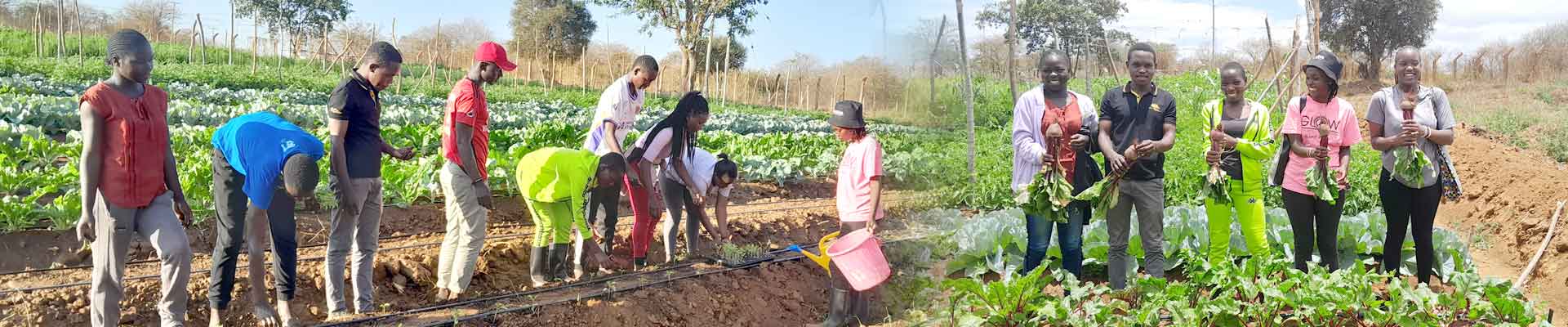
Demonstration farm established through support by UPLIFT-Ag at Kenyatta University, Kitui Campus farm
Promoting learner-centred and blended teaching approaches at Chuka University (Kenya)
At Chuka University, teaching transformation has accompanied curriculum reform. The university has promoted approaches that improve student participation and problem-solving capacity.
Innovations introduced include:
- Project-based learning
- Inquiry-based learning
- Collaborative group work
- Blended and flipped classroom delivery
- Increased use of industry engagement through guest contributions and exposure visits
These approaches aim to shift learning from passive listening to active engagement, ensuring graduates gain confidence in applying knowledge to real agricultural contexts.
Building digital teaching capacity through e-learning platforms at Taita Taveta University (Kenya)
At Taita Taveta University (TTU), teaching innovation has been strongly driven by digital transformation.
Recognizing the need for flexible and technology-enabled learning, TTU invested in staff capacity building for online teaching. Academic staff underwent intensive Moodle training, leading to rapid growth in digital course development.
Key achievements include:
- 42 LMS-supported courses developed in October 2024
- 13 additional courses added in January 2025
- A total of 55 active courses hosted on TTU’s Learning Management System
This progress strengthens TTU’s ability to deliver agriculture education through modern digital platforms while expanding access to learning resources.
Ttu also launched a tissue culture laboratory to enhance practical learning at the institution.
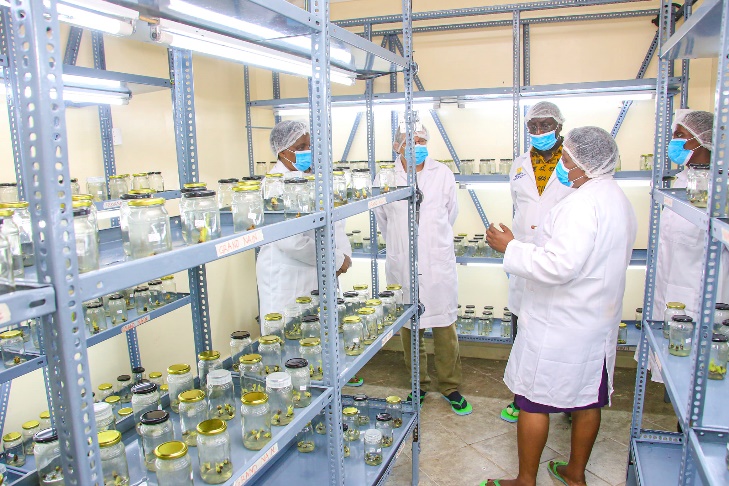
Inside the Tissue Culture Laboratory at Taita Taveta University
UNILAK (Rwanda): Introducing the Living Lab model for experiential learning
At the University of Lay Adventists of Kigali (UNILAK), teaching innovation has been advanced through the adoption of the Living Lab approach.Living Labs place students in real-world environments where learning is shaped through:
- Community and industry engagement
- Practical experimentation
- Problem-solving around actual agricultural challenges
This model supports experiential learning beyond the classroom and strengthens the connection between academic training and sector needs.UNILAK’s piloting of this approach reflects the university’s commitment to preparing graduates who can innovate within Rwanda’s agribusiness economy.
Chinhoyi University of Technology (Zimbabwe): Advancing Circular Agriculture Through Hands-On Infrastructure
At Chinhoyi University of Technology, teaching innovation has been strengthened through the establishment of a solar-powered Black Soldier Fly production unit, developed as part of a circular agriculture system within the university.
The facility produces black soldier fly larvae used as protein-rich feed for poultry. Poultry manure is then channelled to the university’s demonstration vegetable farm, creating an integrated and resource-efficient production cycle. A fish pond has also been established at the site, expanding the system and exposing students to diversified agricultural enterprises.
Powered by renewable energy, the unit demonstrates how sustainable technologies can be integrated into agricultural production systems while reducing environmental impact.
Through this circular model, students participate directly in waste recycling, feed production, poultry management, crop cultivation, and aquaculture. Training therefore moves beyond theory, allowing students to experience sustainable and climate-responsive agriculture in practice.
Scaling Learning-by-Doing Approaches at Zimbabwe Open University
At Zimbabwe Open University (ZOU), teaching transformation has been supported by strengthened practical infrastructure and technology-enabled learning.
ZOU integrated innovative areas into agriculture training, including:
- AI and IoT applications for precision farming
- Sustainable agroecology practices
- Community-based partnerships
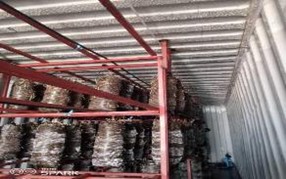
Facilities such as greenhouses, improved mushroom production infrastructure, and demonstration farms further strengthen hands-on learning opportunities.
Kadoma AIP and Senga demonstration farms with greenhouse jointly funded by UPLIFT-Ag and the Zimbabwe Open University.
Looking ahead: Teaching innovation as a pathway to graduate readiness
Across the UPLIFT-Ag consortium, agriculture education is being transformed through a combined focus on innovative teaching and improved learning environments.
By strengthening experiential approaches, expanding digital delivery, investing in teaching farms and demonstration spaces, and building institutional frameworks for quality, partner universities are preparing graduates who are ready to contribute to food systems transformation across Africa.
These efforts represent a major step toward industry-responsive, future-ready agriculture training.
UPLIFT Project, EU-funded, Agriculture Education, Innovative teaching, Teaching farms, Digital learning, Circular Agriculture, University-Industry collaboration
Project Coordinator:
Prof. Maina Mwangi
School of Agriculture and Environmental Sciences
Kenyatta University
Tel: +254710860550
Email: maina.mwangi@ku.ac.ke