Updates
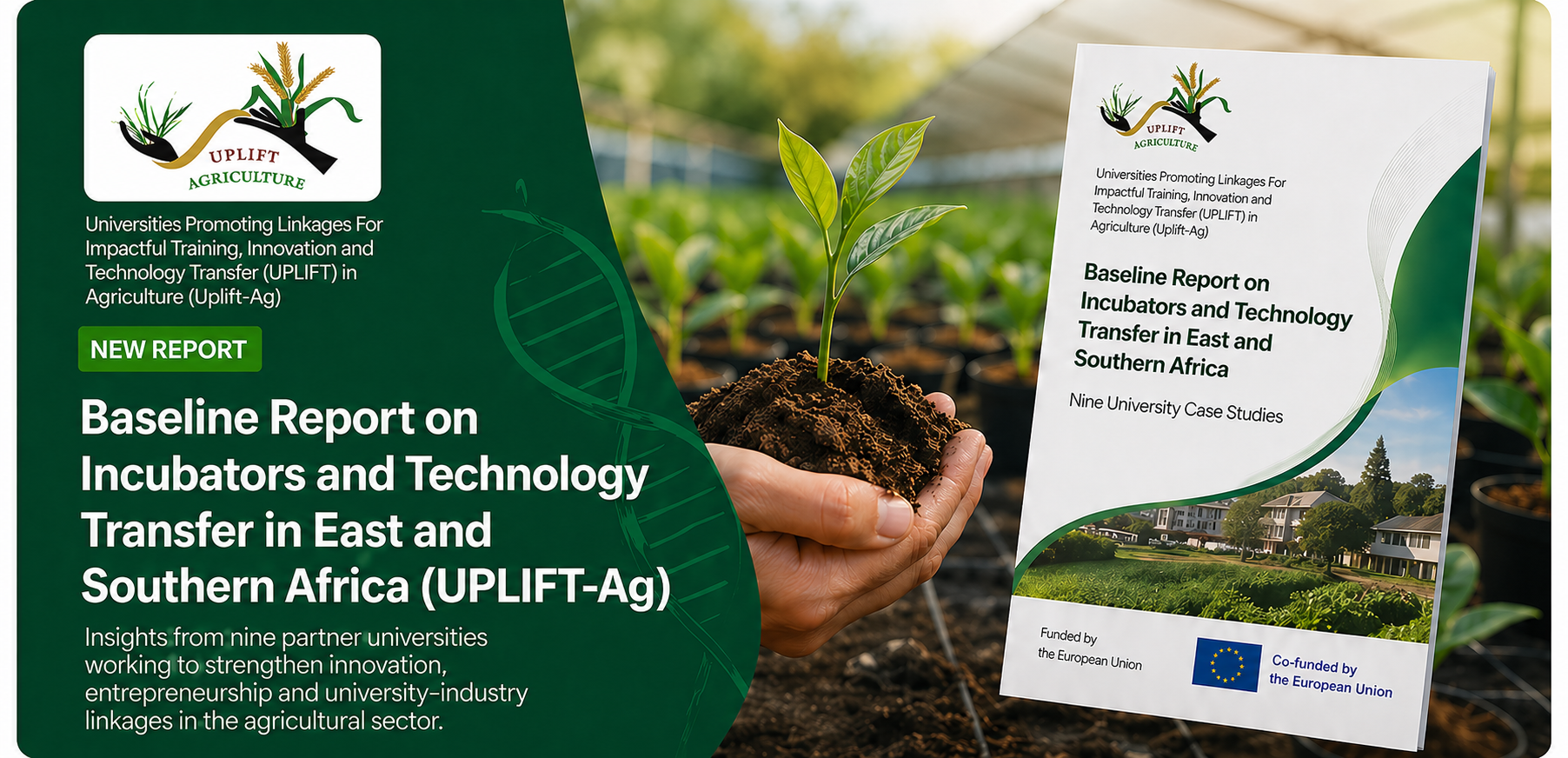
Baseline Report on Incubators and Technology Transfer in East and Southern Africa (UPLIFT-Ag)
This report provides a baseline assessment of incubation and technology transfer capacities across nine UPLIFT-Ag partner universities in East and Southern Africa. It highlights key gaps, development needs, and opportunities to strengthen innovation, entrepreneurship, and university–industry linkages in the agricultural sector.
Connecting Innovation to Industry: Chinhoyi University of Technology’s Practical Approach to Agricultural Training in Zimbabwe
In Zimbabwe, the gap between agricultural training and industry expectations has become increasingly visible in recent years. Employers are seeking graduates who can apply knowledge in real production, processing, and business settings. In response, Chinhoyi University of Technology (CUT) is strengthening agriculture teaching, research, and innovation, thereby enhancing agriculture sector contribution to national development. Through the EU funded UPLIFT-Ag Project, CUT has been focused on building practical, long-term partnerships with industry and improving the relevance of agricultural training. Rather than approaching industry engagement as isolated events, CUT has developed a more structured way for sustained collaborations that support high quality learning, research, innovation and knowledge transfer.
UPLIFT-Ag Training Manual on Strengthening Industry–Institution Linkages
The UPLIFT-Ag Project has developed a comprehensive Training Manual aimed at strengthening industry–institution linkages and enhancing structured engagement within agricultural value chains.
This publication serves as a practical resource for training institutions, agricultural stakeholders, extension actors, and development practitioners seeking to foster sustainable collaboration between academia and industry.
Taita Taveta University Strengthens University–Industry Collaboration Through UPLIFT-Ag project
Taita Taveta University (TTU) has taken deliberate steps to make agricultural training more relevant to industry and community needs. Working within the framework of the EU funded UPLIFT Agriculture Project, and National platforms such as the University Deans of Agriculture Forum in Kenya, TTU is contributing to shaping the priorities for agriculture higher education. The university has concentrated on activities that directly support teaching, research, and community engagement. For students, researchers, and partners, this means stronger links between university training and real-world agricultural practice. TTU also contributed to the coordination of the University Deans of Agriculture Forum (Kenya) and enriched discussions focused on curriculum relevance, graduate skills, and practical collaboration with industry.
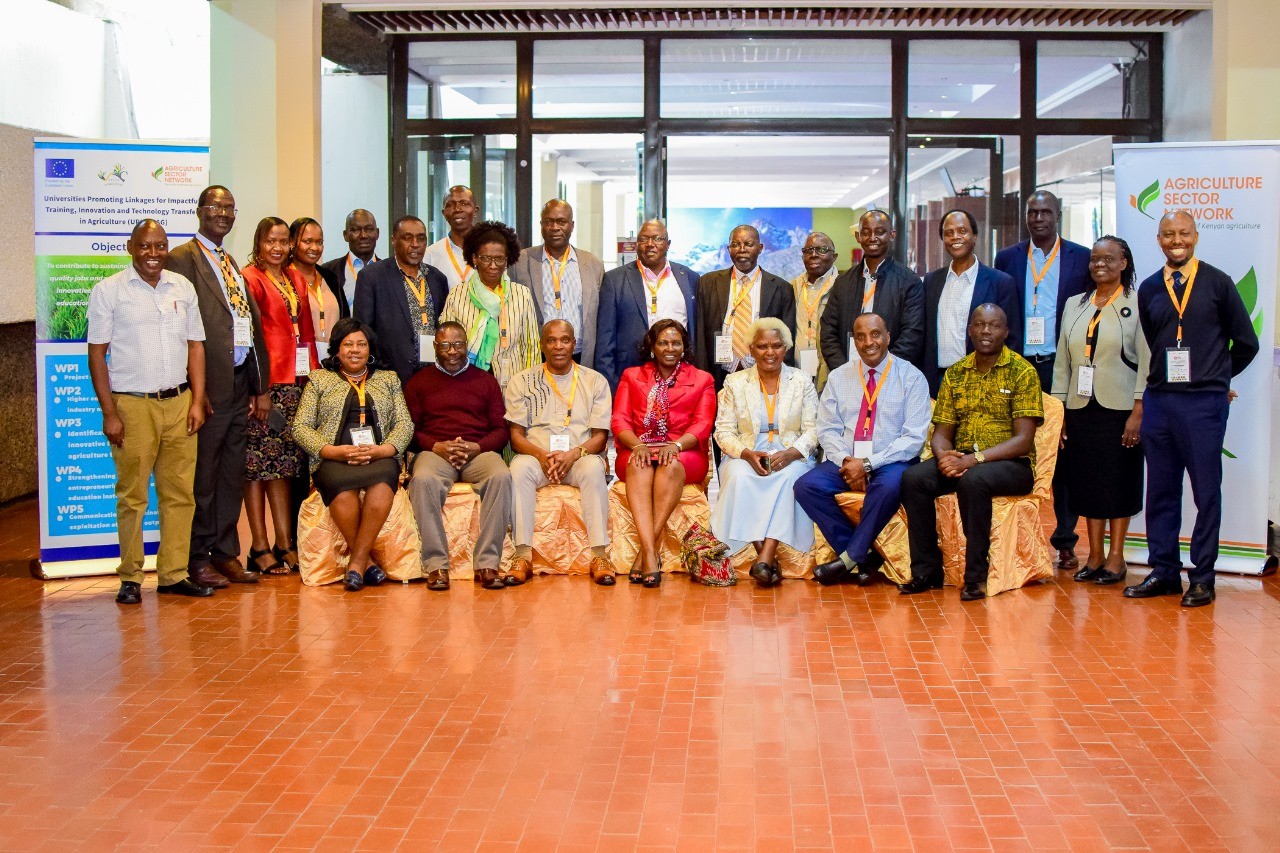
REBUILDING UNIVERSITY INNOVATION AND INCUBATION SYSTEMS UNDER THE EU FUNDED UPLIFT AGRICULTURE PROJECT
Across Africa, universities are full of ideas.
What they often lack are strong systems to support the conversion of the ideas into intellectual properties and clear commercialization pathways. Sustainable incubation models, coordinated industry engagement, and structured support for innovators are among the greatest needs.
Through the Universities Promoting Linkages for Impactful Training, Innovation and Technology Transfer in Agriculture (UPLIFT-Ag) project, partner universities in Kenya, Rwanda, Burundi, and Zimbabwe are strengthening their innovation and incubation ecosystems in practical and measurable ways.
Subcategories
Progress Reports Article Count: 3
Project Coordinator:
Prof. Maina Mwangi
School of Agriculture and Environmental Sciences
Kenyatta University
Tel: +254710860550
Email: maina.mwangi@ku.ac.ke