UNILAK Advances Agricultural Innovation Through UPLIFT-Ag in 2024
In 2024, UNILAK advanced agricultural innovation through the UPLIFT-Ag project. The university reformed its curriculum, introduced the Living Lab model, and launched green start-up incubation. With over 22 new partners, UNILAK is driving sustainable agribusiness growth and preparing students with real-world skills.
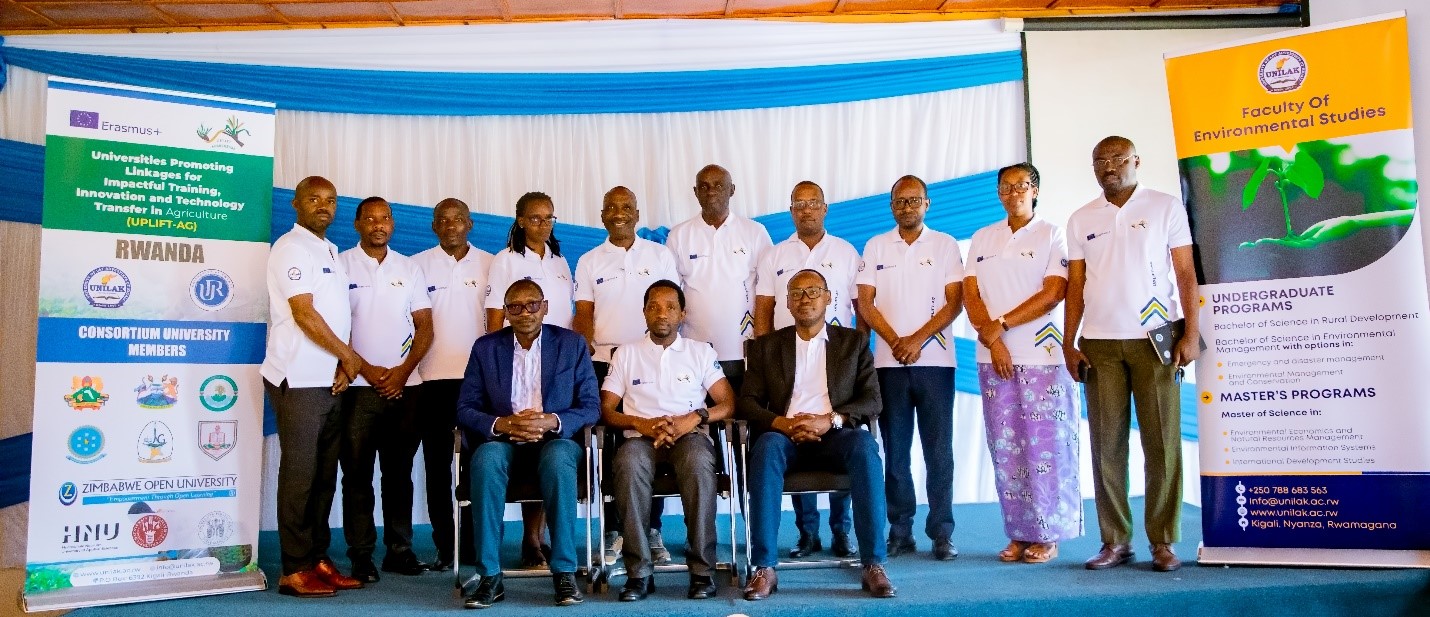
Launch of UPLIFT-Ag at UNILAK, April 2024
Building Strong Foundations for UPLIFT-Ag
UNILAK established a dedicated management team to coordinate UPLIFT-Ag activities, ensuring ownership and accountability across all work areas.
Key highlights in 2024 included:
- Hosting the UPLIFT-Ag launch in Kigali (April 19, 2024) with 80+ stakeholders from academia, government, and industry.
- Co-organizing a collaborative workshop with UR in Rwamagana, focused on action planning and stakeholder mapping.
- Participating in the international benchmarking visit to Hochschule Neu-Ulm, Germany (November 2024).
These engagements strengthened UNILAK’s role as a hub for agricultural innovation and cross-border collaboration.
Reforming Agricultural Education
To modernize agricultural education, UNILAK led curriculum reforms and innovative teaching approaches.
Achievements included:
- Needs assessment for a new BSc in Agribusiness (AGB).
- Mapping and consultation with industry, students, policymakers, and HEIs.
- Introducing the Living Lab teaching method, which brings real-world agribusiness environments into classrooms.
- Developing drafts of Program Specification Forms (PSF), Program Profile Forms (PPF), and Module Descriptor Forms (MDF) for submission to the Higher Education Council.
These reforms will ensure graduates gain practical, industry-relevant skills to address Rwanda’s agribusiness challenges.
Empowering Start-ups and Green Innovation
UNILAK strengthened its Agribusiness Incubation and Innovation Hub with clear operational guidelines on start-up admission, mentorship, graduation, and monitoring.
Key actions:
- Recruiting staff specialized in green technologies and sustainable business practices.
- Identifying training modules for entrepreneurship, innovation, and IP management.
- Supporting incubation of start-ups focused on environmentally sustainable solutions.

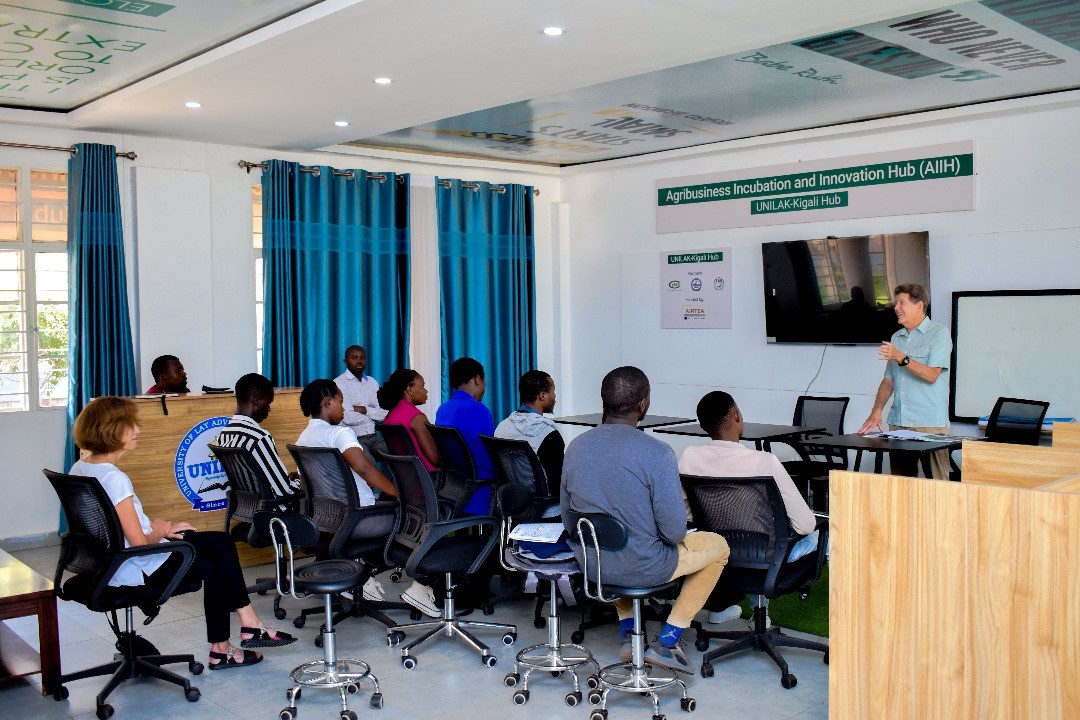
Engagement in incubation activities at UNILAK Innovation Hub
This model positions UNILAK as a catalyst for green agribusiness innovation in Rwanda.
Extending Reach Through Outreach and Engagement
Visibility and community engagement were key priorities in 2024:
- Over 80 stakeholders joined the UNILAK launch event.
- Branded materials (T-shirts, pens, agendas) kept UPLIFT-Ag visible among partners.
- An article on the UNILAK website reached more than 5,500 students and community members.
- Participation in the 17th Rwanda National Agriculture Show added 22 new partners and identified funding opportunities for future agribusiness programs.

UNILAK team engaging stakeholders at Rwanda National Agriculture Show 2024
Results and Impact in 2024
Through its UPLIFT-Ag activities, UNILAK:
- Established a network of 22+ new agribusiness partners.
- Built a stakeholder database for collaboration and feedback.
- Increased awareness of UPLIFT-Ag goals and opportunities.
- Strengthened curriculum and teaching capacity in agribusiness.
- Developed policies and mentorship systems for incubators.
- Promoted sustainable and green innovation.
Looking Ahead
UNILAK is committed to scaling up its impact by:
- Rolling out the new BSc Agribusiness program.
- Expanding incubation capacity for green start-ups.
- Deepening partnerships with industry and government.
Through these efforts, UNILAK is shaping the future of sustainable agriculture and agribusiness innovation in Rwanda and Africa.
Project Coordinator:
Prof. Maina Mwangi
School of Agriculture and Environmental Sciences
Kenyatta University
Tel: +254710860550
Email: maina.mwangi@ku.ac.ke