Updates
Innovative Agriculture Teaching and Learning Facilities Transform Training Across African Universities
Across Africa, agriculture is evolving rapidly. Climate change, digital technologies, shifting markets, and expanding agribusiness opportunities require graduates who are not only knowledgeable, but also adaptable, technically skilled, and ready to solve real-world agricultural challenges.
While curriculum review ensures agriculture programmes remain aligned with industry needs, meaningful transformation in agriculture education also depends on how learning is delivered. In many universities, traditional lecture-based approaches have limited student engagement and practical readiness.
Through the UPLIFT Agriculture (UPLIFT-Ag) Project, partner universities across Kenya, Rwanda, Burundi, and Zimbabwe are advancing innovative teaching methods while investing in modern learning facilities that enable hands-on, experiential training.
Together, these efforts are reshaping agriculture training in Africa.
Rethinking Agriculture Training: Universities Review Their Curricula for Industry Relevance


This project is co-funded by the European Union.
Across Africa, agriculture remains a key driver of livelihoods, food security, and economic growth. Yet for many graduates, transitioning from university to the workplace has remained a challenge. Employers continue to raise concerns about skills gaps, limited practical exposure, and curricula that no longer reflect the realities of modern agriculture.
It is evident that university training has not kept pace with the evolving needs of the agriculture sector.
New technologies, climate pressures, changing markets, and expanding agribusiness opportunities require graduates with updated skills and stronger practical awareness. Recognizing this, the UPLIFT Agriculture (UPLIFT-Ag) Project has supported partner universities to review and modernize agriculture curricula ensuring programmes are aligned with industry realities and national development priorities.
In the UPLIFT-Ag project curriculum review is the major milestone under Work Package 3, bringing together institutions across Kenya, Rwanda, Burundi, and Zimbabwe in a shared effort to strengthen agriculture training, with technical support from the EU partners (HNU in Germany, UNIVPM in Italy and UCPH in Denmark).
The University of Rwanda and UNILAK: Building a Sustainable Path for training Industry-Ready Agriculture graduates for Rwanda
Starting in 2024, the University of Rwanda (UR) and University of Lay Adventists of Kigali (UNILAK) took a major step to improve agriculture training by working together under the UPLIFT Agriculture (UPLIFT-Ag) Project. Through an innovative approach that deviates from the traditional way where each university engages industry independently, the two leading institutions combined efforts to promote training a approach that focuses on practical skills, employability, and real needs of Rwanda’s agriculture. This new strategy marked a shift from isolated efforts to a national-level collaboration designed to make university training more responsive to the agriculture industry needs.
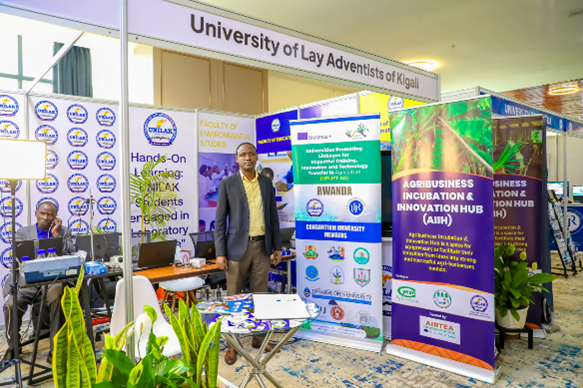
Participants from UNILAK at ICBMI conference 2025 in Kigali
Deans of Agriculture lead in Transforming University–Industry Collaboration in Kenya
From Leadership Dialogue to National Action
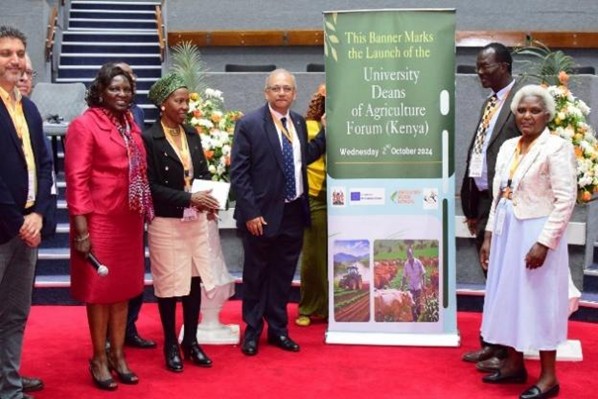
Agriculture remains Kenya’s economic backbone, feeding millions, creating jobs, and sustaining rural livelihoods. Yet for years, a familiar gap persisted: universities trained graduates, while industry struggled to find job-ready skills.
In 2024, a national effort was launched to narrow that disconnect in a visible and coordinated way. At the center of this shift was the University Deans of Agriculture Forum, a leadership platform that moved collaboration beyond isolated engagements and into sustained, action-oriented dialogue.
Building Stronger Bridges: University–Industry Collaboration Baseline Study Report 2025
The UPLIFT Agriculture Project has released the University–Industry Collaboration Baseline Study Report 2025. This report examines how Higher Education Institutions (HEIs) in Kenya, Rwanda, Burundi, and Zimbabwe collaborate with industry to improve agricultural training, research, innovation, and technology transfer. It highlights current challenges, success stories, and actionable recommendations to bridge the gap between academia and practice.
Key insights include:
- How informal and formal partnerships between HEIs and industry are working today
- The role of third parties (NGOs, government, associations) in building linkages
- Barriers slowing down collaboration and how to overcome them
- Policy and practical recommendations for universities, industry, and governments
Click below to explore the full report with detailed findings and recommendations:
Subcategories
Progress Reports Article Count: 3
Project Coordinator:
Prof. Maina Mwangi
School of Agriculture and Environmental Sciences
Kenyatta University
Tel: +254710860550
Email: maina.mwangi@ku.ac.ke